
✍️ Service page by Md. Salauddin Biswas
Healthcare, Medical & Public Health Content SEO Specialist | MA in Medical Anthropology, University of Heidelberg, Germany | Former Senior Research Associate, James P Grant School of Public Health, BRAC University | Director & Head of Content, SA WEBSOFT.
Medical Practice SEO Planning
Plan SEO Before You Publish
Many medical practices publish blogs, service pages, or ads without a clear SEO plan. Some pages may get traffic, but they do not always bring the right patients.
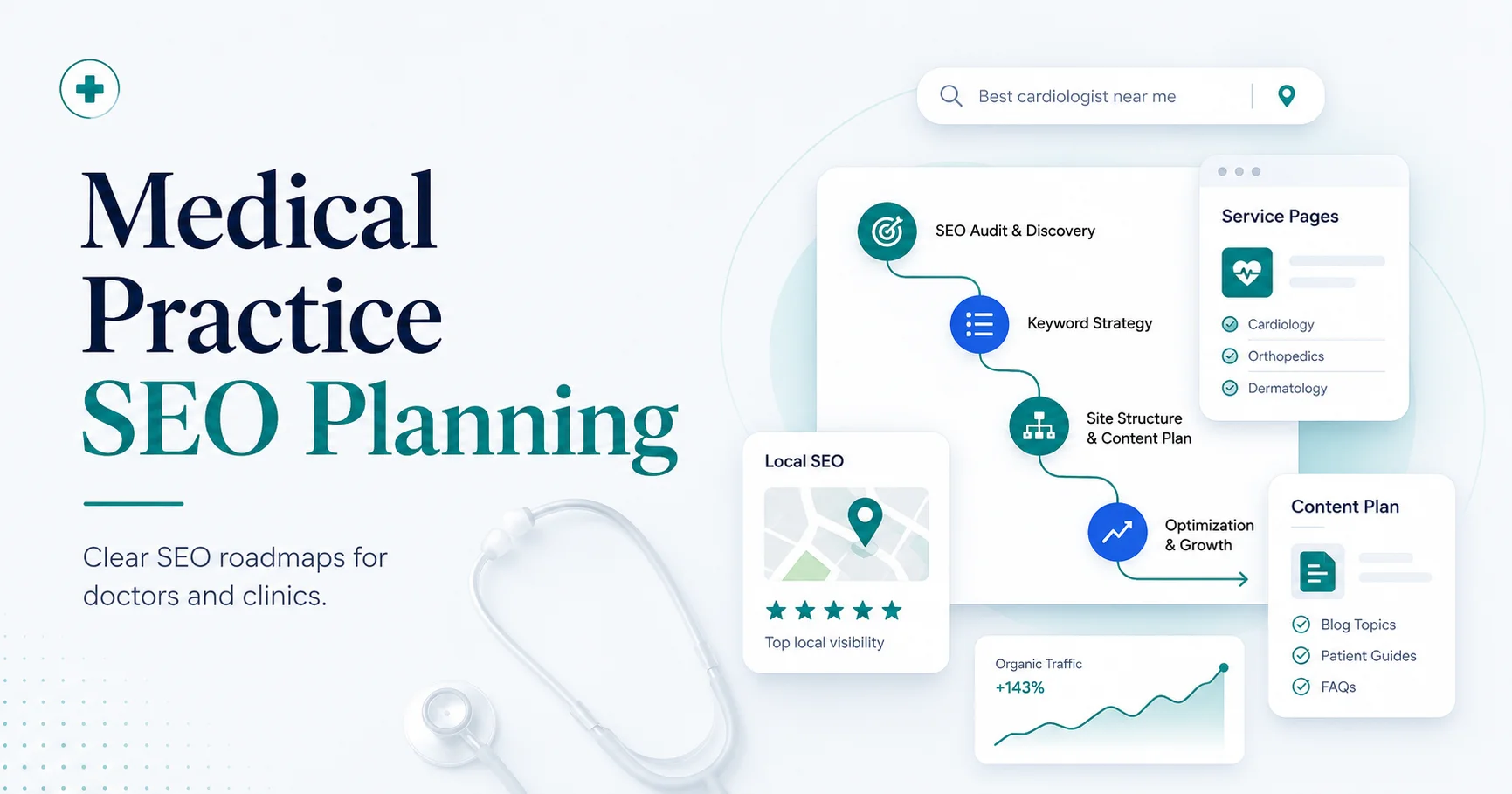
Medical Practice SEO Planning gives your clinic a clear roadmap before you create more pages, rewrite content, or spend more on marketing.
You see which services to target, which pages to build, what content to write, and how patients should move from Google search to appointment.
Simple goal: stop random publishing and build a medical SEO plan around patient search intent, service priorities, local visibility, and trust.
Quick Answer
- Medical Practice SEO Planning is a clear roadmap for doctors, clinics, and healthcare teams.
- It connects your services, patient searches, local SEO, content priorities, internal links, and booking pages into one practical growth path.
- It helps you decide what to fix, write, publish, and measure before your team spends more time or money on random content.
Why Your Clinic Needs an SEO Plan Before More Content
A clinic website should not grow by guesswork.
You may publish a blog today, update a service page next week, and add a new location page later. But without a plan, the pages may not support each other.
Patients search in simple ways. They search by symptom, service, doctor type, location, cost, fear, and urgency.
Your SEO plan should connect those searches to the right pages.
Example: A patient may not search “colorectal consultation.” They may search “blood after stool,” “piles doctor near me,” or “is rectal bleeding serious?” Your SEO plan should know where each search belongs.
Signs your SEO has no plan
These problems are common in medical websites. They can happen even when the website looks professional.
Random blog topics
Blogs are published because they sound useful, not because they support a service, keyword, or patient journey.
Weak service pages
Service pages say what you offer, but they do not explain patient problems, next steps, trust signals, or local intent.
No keyword-to-page map
Many keywords compete with each other because no one has decided which page should rank for which search.
Local SEO is unclear
The website does not clearly support city, neighborhood, branch, or “near me” searches.
No booking path
Visitors read the page but do not know what to do next, who to contact, or why they should book now.
Content lacks trust
Pages do not show author proof, medical review, credentials, update dates, references, or careful health wording.
What your SEO plan includes
The goal is not to create a long keyword list. The goal is to build a clear roadmap your team can follow.
- Service priority map — which services should get SEO focus first.
- Keyword-to-page map — which page should target which patient search.
- Local SEO direction — how to support city, area, branch, and “near me” intent.
- Content roadmap — what service pages, condition pages, FAQs, and blogs to create.
- E-E-A-T checklist — how to show experience, expertise, author proof, review notes, and trust.
- Internal linking plan — how pages should connect naturally.
- Booking journey notes — how to guide visitors from search to appointment.
How patient searches become pages
Good medical SEO starts with patient language. Then we match that language to the right page type.
Patient search
“doctor for sinus infection near me”
This may need a local ENT service page with symptoms, treatment options, doctor proof, and booking CTA.
Patient search
“is blood in stool serious?”
This may need a patient education page that explains warning signs and links to the right specialist page.
Patient search
“anxiety therapist in my area”
This may need a sensitive local landing page with privacy reassurance, therapist fit, and calm next steps.
Who this service is for
This service is for healthcare practices that want SEO growth without random publishing.
Private doctors
For specialists who need more relevant patient inquiries from search.
Small clinics
For clinics that need clear service pages, local SEO, and patient-friendly content.
Specialist practices
For ENT, dental, dermatology, mental health, surgery, therapy, and diagnostic practices.
Healthcare startups
For telehealth, wellness, care, and diagnostic brands that need SEO direction before scaling.
My planning process
I keep the process simple. You should understand the plan without needing SEO jargon.
Step 1
Understand your services
I learn what you offer, which services matter most, and which patients you want to reach.
Step 2
Map patient searches
I organize search intent by symptoms, services, doctors, locations, questions, and booking needs.
Step 3
Build the roadmap
I decide which pages to improve, which pages to create, and what order makes sense.
Step 4
Connect to booking
The plan connects search visibility with patient trust, appointment pages, and clear calls to action.
What you receive
You receive a practical SEO planning document. It is made for action, not decoration.
- 90-day SEO roadmap — what to fix, write, and publish first.
- Keyword-to-page map — clear keyword ownership for each page.
- Service page plan — which service pages need improvement or creation.
- Content topic plan — blogs, FAQs, condition pages, and patient education topics.
- Local SEO notes — city, area, branch, and Google Business Profile direction.
- Internal linking plan — how pages should support each other.
- Measurement plan — what to track in Search Console, Analytics, and booking actions.
Why Medical SEO Is Not Only About Traffic
Medical SEO is not only about traffic.
Your pages may influence how a person understands pain, symptoms, treatment, risk, privacy, or urgency.
That means the plan must be careful. It should use simple language. It should avoid fear-based claims. It should support trust and safe next steps.
My planning philosophy
A medical SEO plan should not chase every keyword. It should guide the right patient to the right page with clear, honest, and useful information.
Why work with me
I have worked with SEO, content writing, and E-E-A-T-focused content since 2017. Now I focus only on medical and health-related websites.
My background includes Medical Anthropology from the University of Heidelberg, Germany, and public health research experience at the James P Grant School of Public Health, BRAC University.
This helps me plan healthcare SEO with both search intent and patient understanding in mind.
My focus: medical websites that need better structure, better content, better trust signals, and a clearer path from search to appointment.
Related services
Medical Website Structure Audit
Find structure gaps before you publish more pages.
Healthcare Content Strategy
Build a patient-first content system for search and trust.
Patient Booking Page Design
Improve the page where visitors decide to book.
Frequently Asked Questions
Short answers for doctors and clinics planning medical SEO.
What is Medical Practice SEO Planning?
It is a clear SEO roadmap for doctors, clinics, and healthcare practices. It shows which pages to build, which keywords to target, what content to write, and how to connect search traffic to patient booking.
Why is my clinic not getting patients from Google?
It may not be only a ranking problem. Your pages may not match patient search intent, local keywords, service priorities, trust signals, or booking flow. A plan helps find and fix those gaps.
Do I need SEO planning before writing blogs?
Yes. Blogs work better when they support your service pages, answer real patient questions, and connect naturally to booking or consultation pages.
Can this help with local SEO?
Yes. The plan can include city, neighborhood, branch, and “near me” search direction. It can also support Google Business Profile strategy and location page planning.
Is this only for large healthcare websites?
No. Small clinics and individual doctors often benefit most because a focused plan helps them avoid wasting time on low-value content.
Do you guarantee rankings?
No. I do not promise rankings. The goal is to build a better SEO foundation with clear pages, patient-focused content, local relevance, and stronger trust signals.
Ready to stop guessing with SEO?
Get a clear medical SEO plan before you publish more content, rebuild pages, or spend more on ads.
About Md. Salauddin Biswas
Md. Salauddin Biswas is a healthcare, medical, and public health content SEO specialist. He has worked with SEO, E-E-A-T-focused content, and healthcare content since 2017. He is currently Director & Head of Content at SA WEBSOFT.
His background includes an MA in Medical Anthropology from the University of Heidelberg, Germany, and public health research experience at James P Grant School of Public Health, BRAC University.
This mix of SEO, research, and health communication helps him build plans that are useful for both patients and search engines. You can visit one of my previous works: nazrulislamcolorectal.com
Important note
This service supports SEO planning, medical content structure, patient communication, and website growth strategy. It does not replace legal, clinical, or HIPAA compliance review. For medical claims, patient data handling, advertising rules, and privacy compliance, your healthcare, legal, or compliance team should review the final website before publishing.