
Healthcare Local SEO Strategy: How to Build & Prioritize It
Quick Answer:
A healthcare local SEO strategy is the framework that organizes your local SEO work in the right order — what to fix first, what creates the most impact, and what can wait. It does not replace the detailed tactical work on your Google Business Profile, citations, or location pages. It decides the sequence in which you do that work, and why.
📄 Download this article as a PDF checklist to use during your practice audit
| CLICK HERE TO DOWNLOAD THE CHECKLIST |
DisclaimerThis content is for general information only. It is not legal, medical, or compliance advice. Search engine results depend on many factors outside the control of any provider. We cannot guarantee specific rankings, traffic, or patient volumes. Healthcare organizations are responsible for complying with all applicable regulations, including HIPAA awareness and local privacy rules. When in doubt, consult a qualified legal or compliance professional.
|

What Does a Healthcare Local SEO Strategy Actually Mean?
Many practices treat local SEO as a task list. They open Google Business Profile, fix a few details, add a photo — and stop there.
The problem is that those tasks do not exist in isolation. Your profile, your citations, your location pages, and your reputation work as one system. If that system has no order, effort gets wasted.
Strategy is different from execution. It does not write the content on your location page. It decides whether that page is even a priority right now.
For a full picture of what local SEO in healthcare means and why it works differently from standard local SEO, see Local SEO for Healthcare. This page is the bridge between understanding and action.
Think of it as a building plan. It does not lay the bricks. It shows you the order in which they need to go down.
What Are the Core Pillars of a Healthcare Local SEO Framework?
Every solid healthcare local SEO strategy rests on six pillars. Each has its own dedicated deep-dive page. Here, we cover them only at the overview level.
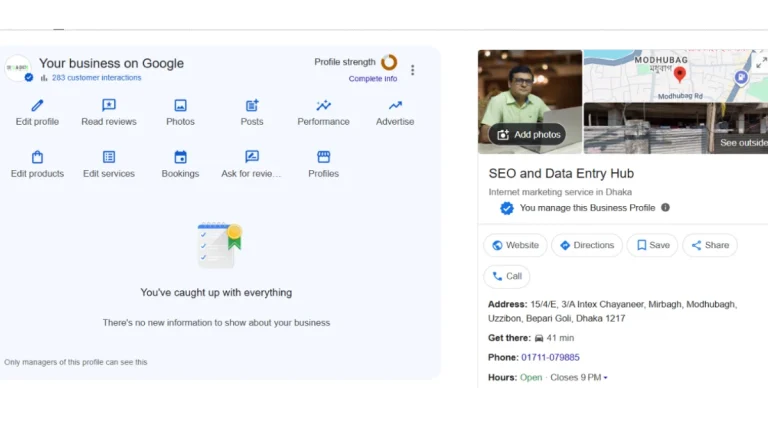
Google Business Profile. Your profile is often the first thing a patient sees before they ever reach your website. Its completeness and accuracy decide whether you show up at the moment that matters. Full setup and management guidance is in Google Business Profile for Healthcare Providers.
Citations and NAP consistency. Every online mention of your practice name, address, and phone number must match. A mismatch can send a worried patient to the wrong door. The full audit and cleanup process is in Healthcare Local Citations and NAP Consistency.
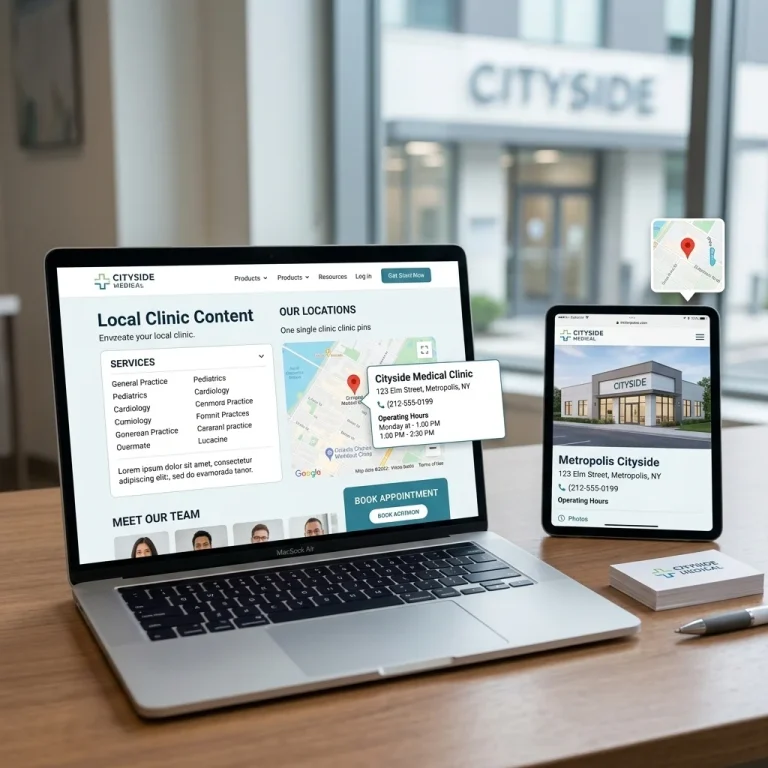
Location pages. Every real place where you see patients deserves its own page with the correct address, hours, services, and providers. How to plan and build those pages is covered in Location Pages for Healthcare Websites.
Reviews and reputation. Reviews build trust before a patient ever picks up the phone. In healthcare, managing them requires extra care because of patient privacy rules.
Multi-location management. When a practice grows beyond one site, coordinating profiles, citations, and pages becomes its own challenge. The full approach is in Multi-Location Healthcare SEO.
Trust and YMYL compliance. Health content falls inside Google’s “Your Money or Your Life” category. That raises the bar for accuracy and transparency across everything, including local signals.
Each of these pillars deserves its own focused attention. Here, they exist only to show where the priority decisions in the next section come from.
How to Prioritize Your Local SEO Work
Not all problems carry the same weight. Some cost you patients today. Others can wait a month without real harm.
What to Fix First
Start with errors that directly confuse a patient at the moment of decision. A wrong phone number. An outdated address. A closed or unverified Google Business Profile. Hours that do not match reality.
These do not need a strategy. They need an immediate correction. Every day they stay wrong is a day a real patient could arrive at the wrong place or reach a dead line.
What Creates the Most Impact
After urgent fixes, shift attention to gaps that carry structural weight: an incomplete Google Business Profile, a missing location page, scattered NAP data across high-authority directories.
These are not urgent in the same way, but they carry the biggest long-term return. They affect all three factors Google uses to rank local results — proximity, relevance, and prominence.
What Can Wait
Low-authority secondary directories, cosmetic photo improvements, or expanding Google Posts can wait until the foundations are stable. Working on them before the basics are solid often means redoing things later.
Priority rule: fix what harms a patient today first; build what creates the most visibility next; polish what refines the profile last.
The Audit at a Glance
Once you know your priorities, the next step is a structured review of your practice. A full audit covers five broad areas. Here is a high-level preview of what each one looks at, so you know what the work involves before you start.
- Business data consistency — whether your name, address, and phone number match everywhere, and whether duplicate profiles exist.
- Google Business Profile basics — verification, accurate hours, correct categories, and services described in the words patients actually use.
- Location page quality — a dedicated, unique page for every staffed location, with providers listed and a mobile-friendly map and call button.
- Local trust signals — named authors or reviewers, visible update dates, HIPAA-aware review handling, and no unverifiable claims.
- Technical discoverability and reporting — proper schema, links pointing to the right location pages, a fast mobile experience, and a clear owner for ongoing maintenance.
This overview tells you what the audit examines. The detailed, box-by-box version — the one you can print and work through line by line — lives in the standalone resource.
📄 Ready to audit your practice? Download the full Healthcare Local SEO Audit Checklist and use it as your working document: Healthcare_Local_SEO_Strategy_Audit_Checklist_Designed
Common Strategic Mistakes Healthcare Organizations Make
Inconsistent location data. An old address in one directory, a different phone number in another — this is not a small detail. It is a reason a patient goes elsewhere.
Weak location pages. A page with only a map and an address does not build trust. It needs to show who treats there, what they treat, and why a patient should trust that specific place.
Fragmented ownership across multiple locations. When no one is clearly responsible for each clinic’s profile, details go stale quietly until it is too late to easily fix them.
Ignoring trust and compliance signals. Local SEO built without attention to YMYL standards creates visibility on an unstable foundation.
Treating local SEO as a one-time setup. Profiles, citations, and reputation shift continuously. A strategy built once and never revisited goes out of date faster than most practice managers realize.
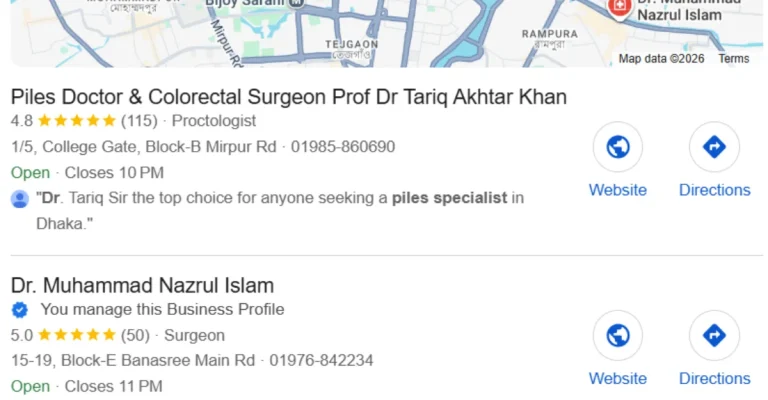
A real-world example of consistent local structure in a healthcare context can be seen at nazrulislamcolorectal.com — not as a ranking case study, but as an illustration of how clean, consistent local data and clear practice structure support local visibility over time.
Does the Strategy Differ by Provider Type?
Short answer: yes, but only in emphasis — not in framework.
Doctors tend to rely more on individual profile authority because they have fewer signals to draw from. See Doctor SEO for provider-level guidance.
Clinics balance local search visibility with service-specific pages, since multiple services are offered under one roof. See Clinic SEO for clinic-level guidance.
Hospitals manage scale — multiple departments, specialties, and buildings — which requires tighter governance. See Hospital SEO for system-level guidance.
The framework described on this page applies across all three. The difference is which pillar you prioritize first.
When to Go Deeper Into the Sub-Pages
This page gives you the plan. Execution happens somewhere else.
If your main problem is map visibility — start with Google Business Profile for Healthcare Providers.
If your audit reveals mismatches in addresses and phone numbers — move to Healthcare Local Citations and NAP Consistency.
If you are missing pages for your real locations — see Location Pages for Healthcare Websites.
If you manage more than one practice — Multi-Location Healthcare SEO covers the full coordination model.
This page does not replace any of them. It tells you where to begin.
Your Next Step
The audit above gives you a clear picture of where your practice stands today. But turning that picture into a week-by-week plan and real execution usually requires a partner who understands the healthcare-specific side of local SEO.
If you want a structured review of your practice’s profile, citations, and location pages, explore Healthcare SEO Services or book a consultation.
Frequently Asked Questions
Where do I start if I have no local SEO strategy at all?
Start with a quick check of your Google Business Profile and core contact information. Fix errors that confuse a patient today before moving into deeper improvements.
How long does it take to see results from a healthcare local SEO strategy?
There is no fixed timeline. Correcting wrong data can show an effect relatively quickly. Building reputation and authority takes months. Anyone who promises a precise timeframe is overstating their control over the process.
Do I need to hire a specialist, or can I run this audit myself?
A basic audit is manageable on your own, especially for a single location. For multiple locations or years of accumulated inconsistencies, specialist experience saves time and prevents avoidable errors.
What is the main risk of skipping this strategic step?
You end up executing tactics without order — optimizing your profile while location pages stay weak, or the reverse. The result is wasted effort and slower progress.
Is there an alternative to building a full strategy?
You can fix problems ad hoc, but without a framework you risk missing systemic issues that quietly undermine your visibility over months.
About the Author
Md. Salauddin Biswas is a healthcare website structure and SEO content specialist with a deep background in medical anthropology. He studied at Heidelberg University in Germany and the University of Dhaka. He focuses on building trustworthy, well-structured content for healthcare platforms and is currently Director and Head of Content at SA WEBSOFT. Connect with him on LinkedIn or visit salauddinbiswas.com/about/.
Editorial Note
This article has been reviewed against current Google guidelines for local search and Google Business Profile at the time of publication. Google’s features and policies can change. We update this content when meaningful changes occur.
References
- Google Business Profile Help — Tips to improve your local ranking on Google: google.com/business/answer/7091
- Google Business Profile Help — Guidelines for representing your business on Google: google.com/business/answer/3038177
- Google Search Central — Creating helpful, reliable, people-first content: google.com/search/docs/fundamentals/creating-helpful-content
- S. Department of Health & Human Services — HIPAA for Professionals: hhs.gov/hipaa/for-professionals